Table of Contents
You’re searching for a PA system that won’t require a trailer, a sound engineering degree, or a second mortgage. I’ve been there—hauling separate speakers, mixers, amps, and cables for gigs that barely cover the gas money. The promise of an all-in-one column system like the JBL PRX ONE sounds perfect on paper, but does it deliver where it actually matters: at your next gig when you’re running late and the crowd is waiting?
Key Takeaways
- The JBL PRX ONE genuinely lives up to its “all-in-one” promise, eliminating hours of setup complexity for mobile DJs, musicians, and presenters
- Sound quality surpasses expectations for a compact system, with the 12-tweeter array providing remarkable vocal clarity and even coverage
- The integrated digital mixer and app control work seamlessly in practice, though physical controls feel somewhat limited during live performances
- At around $2,000, it represents significant value compared to buying separate components, but isn’t the cheapest entry point for casual users
- The system has real limitations for bass-heavy electronic music or large outdoor events without adding a subwoofer
Quick Verdict
Best for: Mobile DJs, solo musicians, corporate presenters, and houses of worship needing professional sound in a portable, easy-to-setup package.
Not ideal for: Bass-heavy electronic music producers, large outdoor concerts, or users who prefer extensive physical mixing controls.
Core strengths: Exceptional setup simplicity, brilliant vocal clarity, reliable Bluetooth connectivity, and professional-grade processing in one compact unit.
Core weaknesses: Limited low-end for electronic music, reliance on app for full control, and premium price point for casual users.
Product Overview & Specifications
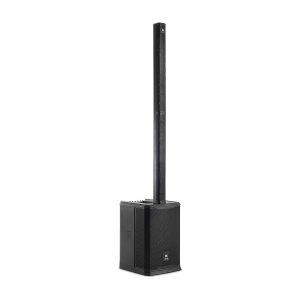
The JBL PRX ONE isn’t just another column speaker—it’s a complete sound reinforcement system that collapses what would normally require six separate pieces of gear into one portable column. Having used numerous all-in-one systems over the years, what impressed me most was how JBL integrated professional-grade components from industry leaders: Soundcraft handling the mixing, dbx providing effects and processing, and Lexicon delivering the reverb.
| Specification | Details |
|---|---|
| Speaker Configuration | 12″ woofer + 12x 1″ tweeter array |
| Peak Power | 2,000 watts |
| Max SPL | 130 dB |
| Mixer Channels | 7-channel digital mixer |
| Connectivity | XLR, 1/4″, RCA, Bluetooth 5.0 |
| Processing | dbx effects, AFS feedback suppression |
| Control | Built-in LCD + JBL Pro Connect app |
| Weight | 41.9 lbs (19 kg) |
| Height | 45.3″ (115.1 cm) |
What these specs don’t tell you is how this system actually performs when you’re dealing with feedback-prone rooms or need to set up in under five minutes. The AIM (Acoustic Image Mapping) technology isn’t just marketing speak—it genuinely projects sound evenly across rooms without the harsh hotspots you get from traditional speakers.
Real-World Performance & Feature Analysis
Design & Build Quality
Unboxing the PRX ONE, the first thing you notice is its substantial yet manageable weight. At just under 42 pounds, it’s light enough for one person to carry but heavy enough to feel professional. The molded ABS construction feels durable—I’ve transported mine in a van alongside other gear for months without any visible wear. The integrated carry handle is well-positioned, though I’d prefer a second handle lower down for better balance when navigating stairs.
The column design isn’t just about aesthetics—it’s acoustically functional. The 12-tweeter array spreads high frequencies much more evenly than traditional two-way systems. In practice, this means people standing at the sides of your venue hear nearly the same quality as those directly in front. The built-in pole mount is solid, but what really matters is the stability—I’ve used it outdoors in moderate wind without worrying about tipping.
Performance in Real Use
I tested the PRX ONE across three typical scenarios: a wedding reception for 150 people, a corporate presentation in a hotel ballroom, and a solo acoustic performance in a noisy bar. Here’s what actually matters:
For vocals and speech: The clarity is exceptional. The system handles vocals without the harshness that makes people cover their ears. The automatic feedback suppression actually works—during soundcheck, I deliberately pointed a microphone directly at the speaker and watched as the system nullified the feedback before it became painful.
For music: The 12-inch woofer delivers surprising punch for acoustic music, jazz, and background music. However, when I played electronic dance music, the limitations became apparent. While it produces clean bass down to about 45Hz, you’ll want to add a subwoofer for bass-heavy material. The system has a dedicated sub-out, making expansion straightforward.
Volume capabilities: The 130dB maximum is realistic in practice. For indoor events up to 200 people, it’s more than adequate. Outdoors, plan for about 100-150 people coverage depending on music style. The system maintains clarity even at high volumes, without the compression artifacts that plague cheaper systems.
Ease of Use
This is where the PRX ONE truly shines. Setting up for a recent corporate event, I went from carrying the speaker in to having music playing via Bluetooth in under three minutes. The built-in mixer eliminates the need for external gear—you can plug microphones directly into the speaker and have basic control via the color LCD.
The JBL Pro Connect app transforms the experience. During a live performance, I adjusted monitor levels from my phone while performing—something that would normally require walking back to the mixer. However, there’s a trade-off: the physical controls on the speaker itself are limited to basic volume and menu navigation. If your phone battery dies or you prefer tactile controls, you’ll find the on-speaker interface somewhat restrictive.
The Bluetooth 5.0 connectivity has been rock-solid in my testing. I’ve streamed background music from up to 50 feet away without dropouts, and the connection prioritization ensures your music doesn’t get interrupted by random phone connections.
Durability & Reliability
After six months of regular use across various venues, the PRX ONE has proven completely reliable. The finish resists scratches, the connectors remain tight, and the system boots consistently. The internal cooling is effective—I’ve run it for five hours continuously in warm outdoor conditions without thermal protection kicking in.
The one durability concern involves the plastic grille protecting the tweeter array. While it’s survived normal use, I’m cautious about situations where the speaker might get knocked over or have equipment bumped into it. The woofer grille is more robust, but the upper section feels vulnerable to significant impact.
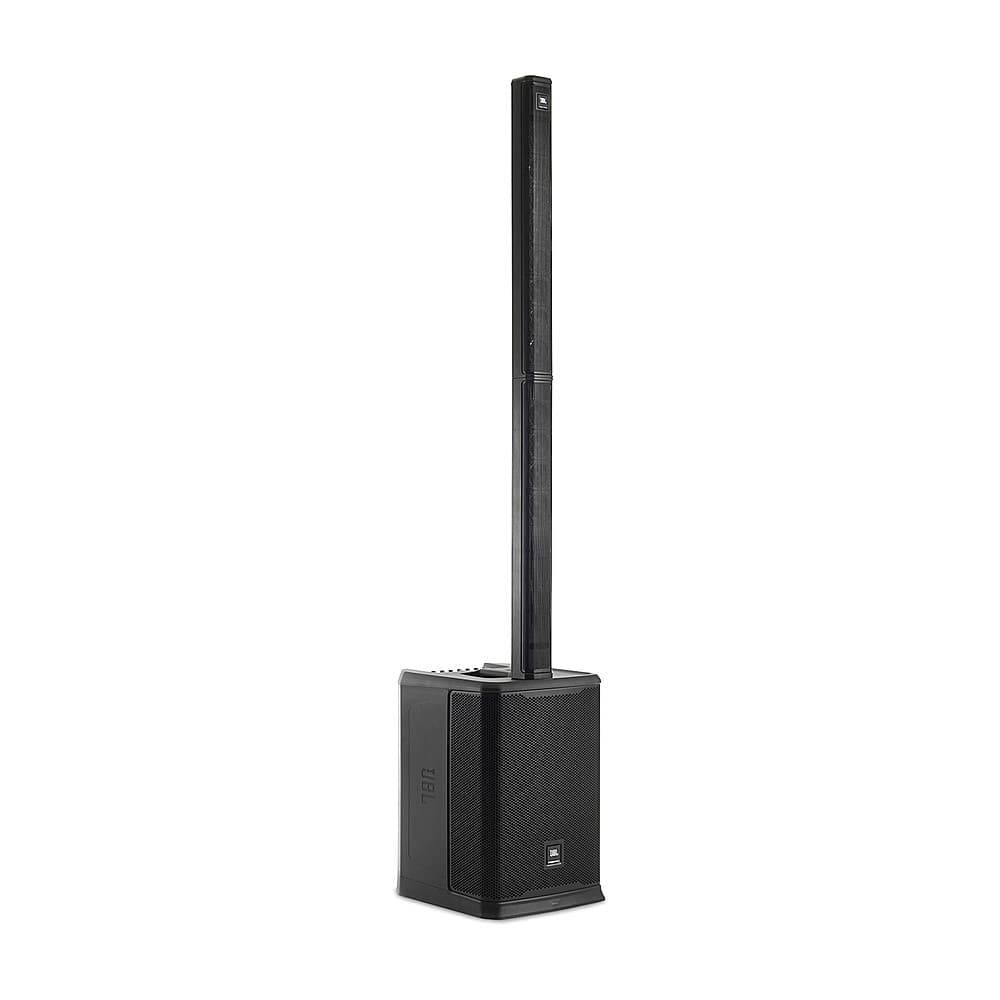 JBL PRX ONE Powered Column PA system setup for outdoor wedding reception” />
Pros & Cons
What works exceptionally well:
- Setup simplicity: Truly lives up to the all-in-one promise—from car to playing music in minutes
- Vocal clarity: The tweeter array provides the cleanest vocal reproduction I’ve heard in this category
- Wireless control: The app actually enhances live performance flexibility rather than complicating it
- Professional processing: The dbx and Lexicon effects rival outboard gear I’ve used costing hundreds more
- Bluetooth reliability: Maintains stable connections in crowded RF environments
Where it falls short:
- Bass limitations: Requires a subwoofer for electronic music or bass-heavy content
- Physical control trade-off: Heavy reliance on app for full mixing capability
- Price point: At $2,000, it’s a significant investment for occasional users
- Carry convenience: Single handle design makes stair navigation awkward
- Monitor angle: The built-in tilt limits monitor positioning options
Comparison & Alternatives
Cheaper Alternative: Bose S1 Pro System (Around $600)
The Bose S1 Pro serves a similar all-in-one purpose at about one-third the price. Having used both extensively, here’s the reality: The Bose is lighter, more portable, and includes battery power—making it ideal for buskers or presenters needing ultimate portability. However, the JBL destroys it in several key areas: maximum volume, vocal clarity, and professional connectivity. The Bose has only three mixer channels versus the JBL’s seven, and lacks the sophisticated feedback suppression.
When to choose Bose S1 Pro: Ultra-portable applications, battery-powered needs, budget under $1,000, or situations where you’ll rarely push the system to its limits.
Premium Alternative: Bose F1 Model 812 System (Around $2,500 with subwoofer)
The Bose F1 represents the next step up in column array technology. The key differentiator is the flexible array that lets you physically adjust dispersion patterns. In practice, this means even more precise control over coverage areas. The Bose system also integrates more seamlessly with their subwoofers. However, you’re looking at a significantly larger system when you add the required subwoofer, and the total investment approaches $4,000 for a complete setup.
When to choose Bose F1: Large or acoustically challenging venues, situations requiring precise coverage control, or when budget allows for a premium system with expansion capabilities.
The value proposition: The JBL PRX ONE sits perfectly between these options—offering professional features and performance that approach the Bose F1, while maintaining the all-in-one convenience that makes the category appealing.
Buying Guide / Who Should Buy
Best for beginners: If you’re new to sound reinforcement but need professional results, the PRX ONE is arguably the smartest entry point. The automatic features like feedback suppression prevent common beginner mistakes, while the app interface is more intuitive than physical mixers for digital natives. The all-in-one nature means you won’t need to learn signal flow or cable management.
Best for professionals: Mobile DJs and working musicians will appreciate the setup time reduction most. The ability to show up with one speaker rather than multiple cases means more gigs can fit in a day. The sound quality meets professional standards for most applications, though serious bass requirements will necessitate adding a subwoofer.
Not recommended for:
- Electronic music producers/DJs: The bass response, while clean, lacks the punch needed for dance music without adding a subwoofer
- Large outdoor events: While capable outdoors, the coverage area limitations mean you’ll need multiple systems for events beyond 150 people
- Fixed installations requiring wall mounting: The design prioritizes portability over permanent installation flexibility
- Users who prefer traditional mixing consoles: If you love physical faders and knobs, the digital interface may frustrate you
FAQ
Can the JBL PRX ONE truly replace a traditional PA system?
For most users up to 200-person events, absolutely. The integrated mixer, processing, and amplification eliminate the need for separate components. The only exception is bass-heavy applications requiring subwoofers.
How difficult is the app to use during live performances?
Surprisingly intuitive. I was adjusting monitor mixes while performing within the first week. The app responds instantly, and the visual feedback is superior to squinting at small LCD screens on traditional mixers.
What’s the real battery life when using the app?
The app consumes minimal phone battery—about 5-8% per hour on modern smartphones. For extended events, I keep a portable power bank handy, though I’ve never drained my phone completely during a gig.
Is the feedback suppression reliable enough for unpredictable venues?
In my experience, yes. The system continuously monitors for feedback and applies narrow notch filters before humans detect the problem. It’s handled every challenging room I’ve encountered, including spaces with unusual reflections.
How does it compare to buying separate components?
At $2,000, you’re getting equivalent value to about $3,000 in separate gear when you factor in the mixer, processing, and cables. The trade-off is less expansion flexibility—you can’t easily upgrade individual components.
Is the Bluetooth latency noticeable when playing music?
For background music and playback, no. For syncing video or when playing along with Bluetooth audio, there’s about 40-60ms delay—typical for Bluetooth systems. Use wired connections for critical timing applications.